Faith & Mental Wellness
Cognitive Behavioral Therapy and Scripture have more in common than you might think. Here’s how to use both to get out of your own way.
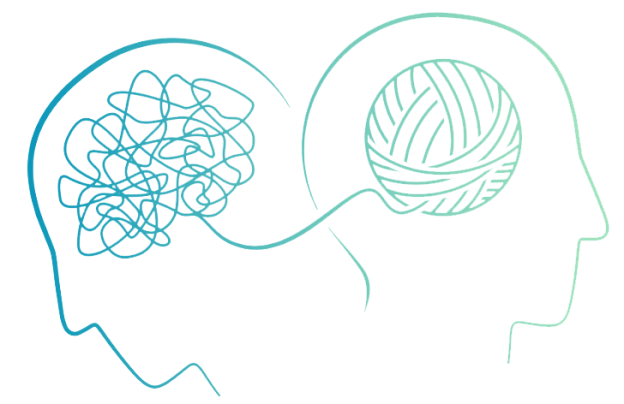
We’ve all been there — paralyzed in front of a task we know we need to do, talking ourselves out of starting, drowning in “I can’t,” “I’ll fail,” or “what’s the point?” Procrastination and self-defeating behavior aren’t laziness. They’re the fruit of distorted thinking. Cognitive Behavioral Therapy (CBT) teaches us to identify and correct those mental distortions — and remarkably, the Bible has been making the same case for millennia. Here are seven principles to live by.
1. Identify the thought, then question it
CBT’s foundational move is catching automatic negative thoughts before they drive your behavior. When you think “I always fail at things like this,” pause and ask: Is that actually true? What evidence do I have? What would I say to a friend who said this? Most self-defeating thoughts collapse under honest scrutiny.
“We demolish arguments and every pretension that sets itself up against the knowledge of God, and we take captive every thought to make it obedient to Christ.” 2 Corinthians 10:5
2. Replace catastrophizing with realistic thinking
Catastrophizing — imagining the worst possible outcome as certain — is one of procrastination’s favorite tools. CBT calls this a cognitive distortion. The remedy isn’t blind optimism; it’s honest, grounded appraisal. Ask: “What is the most likely outcome?” rather than “What if everything falls apart?” Accurate thinking, not wishful thinking, is the goal.
“For God has not given us a spirit of fear, but of power and of love and of a sound mind.” 2 Timothy 1:7
3. Break tasks into small, concrete steps
Procrastination thrives on vagueness. “Work on the project” is paralyzing. “Open the document and write one paragraph” is doable. CBT encourages behavioral activation — the practice of taking small, specific actions to disrupt avoidance cycles. Momentum builds from motion, not the other way around.
“Do not despise these small beginnings, for the Lord rejoices to see the work begin.” Zechariah 4:10 (NLT)
4. Challenge the “I’m not good enough” story
Core beliefs are the deep, often unconscious convictions we hold about ourselves — and “I am fundamentally not good enough” is one of the most common. CBT works to surface and restructure these beliefs with evidence and healthier alternatives. You are not your worst performance or your harshest critic’s verdict.
“I praise you because I am fearfully and wonderfully made; your works are wonderful, I know that full well.” Psalm 139:14
5. Renew your mind daily — literally
CBT works through repetition. Correcting a distortion once doesn’t rewire a neural pathway; doing it consistently over time does. This is why journaling, thought records, and daily reflection are central to the practice. The mind changes through sustained, deliberate attention — a truth therapy and faith share completely.
“Do not conform to the pattern of this world, but be transformed by the renewing of your mind.” Romans 12:2
6. Act despite the feeling — don’t wait to feel ready
One of CBT’s most liberating insights is that action doesn’t have to wait for emotion. You don’t need to feel motivated to start — starting creates motivation. Self-defeaters often say “I’ll do it when I feel like it.” But feeling like it often comes after doing, not before. Emotions follow behavior more than they lead it.
“Whatever your hand finds to do, do it with all your might.” Ecclesiastes 9:10
7. Practice self-compassion, not self-condemnation
Beating yourself up for procrastinating doesn’t produce action — it produces shame, and shame produces more avoidance. CBT encourages you to treat yourself with the same grace you’d offer a struggling friend. Acknowledge the setback, understand what drove it, and redirect without punishing yourself into paralysis.
“There is therefore now no condemnation for those who are in Christ Jesus.” Romans 8:1
The bottom line
CBT and the Bible both insist that transformation is possible — not through willpower alone, but through the consistent, courageous work of reshaping how we think. Whether your support comes from a therapist’s office or a morning devotional (ideally both), the invitation is the same: examine your thoughts, reject what’s false, choose what’s true, and take the next small step. That’s where freedom begins.
 Chuck Anderson