
Faith & Neurodiversity
On ADHD, the spiritual life, and the grace that holds us together
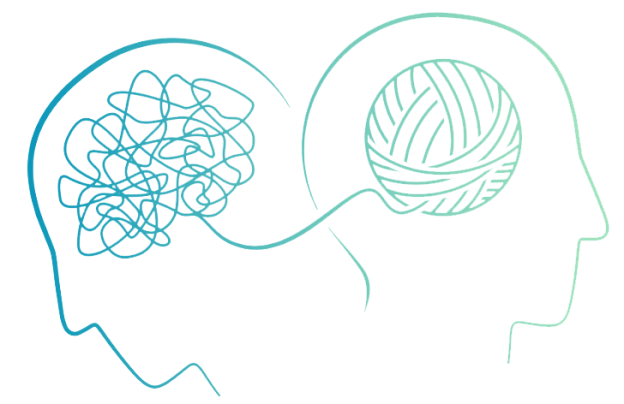
You open your Bible with every intention in the world. You find the passage. You settle in. And then — somewhere in the first two verses — you’re mentally replanning your entire week, or wondering whether that thing you said at lunch on Thursday came across wrong, or noticing that the ceiling fan is slightly wobbly. By the time you surface, the devotion is over, and whatever God might have been saying has dissolved like morning mist.
If that’s you — and if you have ADHD, there’s a very good chance it is — I want you to hear something important before we go any further: that isn’t a faith problem. It’s a brain chemistry problem. And God, who designed your particular brain down to its last neuron, has never once been thrown off by how it works.
God wasn’t surprised by the diagnosis. He isn’t disappointed by the distraction. And he has not put your spiritual growth on hold until you figure out how to sit still for thirty minutes.
What ADHD actually does to your devotional life
ADHD affects something called working memory — essentially the brain’s short-term scratchpad where you hold information while you’re using it. For many of us with ADHD, that scratchpad has a slow leak. You read a verse that genuinely moves you, and by the time you’ve reached the end of the paragraph, the feeling is gone and you can’t quite remember what sparked it.
It also affects dopamine — the brain’s primary motivation and reward chemical. Stillness and silence, which are often held up as the ideal of Christian devotion, can actually be some of the hardest environments for the ADHD brain. Without enough external stimulation, the ADHD mind generates its own noise. The quiet that is supposed to help you hear God can feel like standing in the middle of a busy intersection.
I say all of this not to give you an excuse to skip your quiet time, but to help you stop carrying the weight of unnecessary shame. Understanding what’s happening neurologically is the first step toward building a spiritual life that actually works for you — not against you.
“Be still and know that I am God.” The Hebrew word translated “be still” is raphah — it means to let go, to release, to cease striving. That’s an invitation to surrender, not a command to sit motionless. There are many ways to let go.
You might be more spiritually wired than you think
Here’s something worth celebrating before we talk strategy: the same ADHD brain that makes a traditional quiet time hard is often the same brain that, when it locks onto Jesus, produces a depth and intensity of worship that is genuinely extraordinary. The capacity for hyperfocus — that tunnel-vision state where the ADHD brain is fully lit up — is a remarkable gift when it gets pointed at the right thing. The big-picture, pattern-seeing, connection-making tendencies that come with ADHD are the exact same tendencies that help people grasp the grand sweep of the gospel in ways that take many years to see.
Many of the most passionate, creative, movement-starting people in church history — the ones who couldn’t stop talking about Jesus, who pioneered new ways of reaching people, who refused to sit still for the status quo — would almost certainly meet the diagnostic criteria for ADHD today. Your wiring isn’t a liability. It just needs the right outlet.
Six practical ways to build a consistent walk with Jesus
1. Write it down before it disappears
Don’t try to remember what God says to you in your quiet time — your working memory will almost certainly drop it. Instead, keep a journal open while you read, and write one sentence before you close your Bible. One takeaway. One prayer. One word. It doesn’t need to be deep. “He is with me today” is enough. The act of writing it externalises the thought and gives it somewhere to live outside your head.
2. Pray with your body, not just your mind
Walking prayer isn’t a consolation prize for people who can’t manage “real prayer.” For the ADHD brain, physical movement actually regulates the nervous system and can quiet the mental chatter that silence alone makes worse. Pray out loud on a walk. Pace your room. Do the dishes while you talk to God. Your body and your soul are deeply connected, and when one gets engaged, the other often follows.
3. Go short and frequent instead of long and rare
One forty-five-minute quiet time might be working against your neurology. Three or more five-minute touchpoints spread through the day might serve you far better. Set phone alarms with encouraging labels. Use transition moments — the shower, the commute, the few minutes before bed — as quick on-ramps to awareness of God’s presence. With spiritual habits, consistency across the week matters far more than duration in a single session.
4. Engage more than one sense with scripture
Read it out loud. Listen to the audio Bible while you drive. Use a Bible with room to underline, circle, and doodle in the margins. When your visual, auditory, and physical systems are all engaged with the text at once, the information has more entry points into your memory. A passage heard three times is far more likely to stick than a passage read once in silence.
5. Build your prayer life into your environment
Stop relying on yourself to remember who and what to pray for — your working memory is not a reliable filing system, and that’s okay. Put sticky notes where you’ll see them. Keep a small whiteboard with names on it near your desk. Record a voice memo to God when something hits you. The goal is to move the weight of remembering out of your head and into your physical space, where it can prompt you without effort.
6. Don’t try to do this alone
One of the most neurologically effective things you can do for your spiritual life is to tie it to other people. A prayer partner, a small group, a regular Sunday rhythm — all of these provide external structure and social accountability that your own executive function genuinely struggles to generate by itself. You were designed for community. Leaning into that isn’t weakness; it’s wisdom.
The grace that doesn’t depend on your focus
Let me close with the most important thing I want you to take away, because everything else I’ve said is just strategy — and strategy without gospel is just self-improvement with religious vocabulary.
God’s nearness to you isn’t a reward for successfully completing your quiet time. His love does not rise and fall with your ability to stay focused on a passage. On the mornings when your devotions are rich and full and you feel like you could hear the Lord clearly — and on the mornings when you opened your Bible and immediately disappeared into a thirty-minute thought spiral about something completely unrelated — in both of those mornings, you are equally held, equally seen, equally loved.
The gospel isn’t “try harder and God will meet you.” The gospel is that Jesus came all the way to us, in our distraction and our weakness and our inability to get it together, and he said, “I want to walk with you anyway.” That’s the foundation everything else is built on.
If your brain makes traditional forms of devotion hard, you are not disqualified from depth with God. You may simply need a different path to the same destination. And the God who made your wiring is happy to walk that path with you — at whatever pace, in whatever shape, your beautiful and particular mind can manage.
 Chuck Anderson